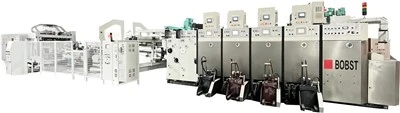

The workflow of carton printing machinery is a precise and systematic process, primarily comprising the following key steps:
Plate Making: In traditional printing methods, the first step involves converting the finalized graphic and textual design into a printing plate; common plate types include flexographic plates and offset plates. This serves as the preparatory phase prior to printing, ensuring that the graphic content is accurately and flawlessly reproduced on the carton.
Plate Mounting: The prepared printing plate is mounted onto the cylinder of the carton printing machine. This constitutes a critical stage in the printing process, as the accuracy and stability of the plate mounting directly determine the overall print quality.
Inking: Utilizing an anilox roller or ink roller, ink is applied evenly across the graphic areas of the printing plate. This step requires a precise and moderate ink application-neither excessive nor insufficient-to ensure the clarity and color saturation of the printed result.
Impression: As the printing plate comes into contact with the cardboard, specific pressure is applied to transfer the graphic and textual information from the plate onto the carton's surface. This constitutes the core of the printing process; the force and uniformity of the impression exert a pivotal influence on the final print quality.
Feeding and Drying: Upon the completion of printing, an automated feeding system conveys the printed cardboard to the subsequent processing stage. Simultaneously, a drying process is initiated to prevent smudging or blurring caused by wet ink.
Post-Printing Processes: Depending on production requirements, the printed cartons may undergo additional post-printing treatments-such as slotting, die-cutting, and box gluing. These processes can typically be integrated into a continuous production line to facilitate automated manufacturing.