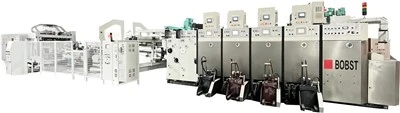

Static Maintenance
Static maintenance of a carton printing machine refers to the maintenance procedures performed on the machine while it is in a stationary state.
Establish Rules and Regulations for Machine Maintenance
Maintenance procedures should be strictly guided by the machine's operational manual. Examples include periodic oil changes, cleaning of filters, and regular checks of machine precision.
Intensify Maintenance of Critical Components.
Gears, cams, sprockets, rollers, and bearings are critical components within carton printing machinery; their maintenance requires a distinct approach compared to other parts, as any deviation in their precision will directly impact print quality. Springs are frequently utilized in the machine's force-balancing mechanisms; their performance directly determines the precision of the interplay between moving parts. Springs must possess acute elasticity; conversely, elastic hysteresis and irreversible plastic deformation are detrimental to their proper functioning. If any of the aforementioned issues are detected, the affected springs must be replaced immediately.
Implement Technical Modifications to Enhance Machine Maintenance.
Effective machine maintenance requires that ease of maintenance be a primary consideration during the machine's design phase. However, given the inherent complexity of printing presses, it is evidently impossible to anticipate and account for every conceivable factor during the design stage; furthermore, maintenance requirements may evolve in response to changing environmental conditions. Consequently, structural elements that hinder maintenance-provided that modifications do not compromise the machine's normal operation-should be improved or redesigned to facilitate easier upkeep.
Dynamic Maintenance
Dynamic maintenance of carton printing machinery refers to the maintenance performed on the machine while it is in a state of motion. Static maintenance serves as the prerequisite for dynamic maintenance; conversely, the machine's dynamic operation serves as a means to verify the effectiveness of its static maintenance. Dynamic maintenance is of paramount importance for carton printing machinery. The primary aspects of dynamic maintenance for carton printing machinery include:
Inspection of the Machine's Readiness Status: The machine's readiness status can be assessed through jogging (inching) or manual rotation. This allows for the detection of issues such as tools or other foreign objects lodged within the machine; it also verifies whether the printing plates are mounted in the correct position-improper positioning could lead to plate damage or difficulties in achieving proper registration. Furthermore, it ensures that the printing blanket is mounted correctly; improper mounting could result in printing defects and, in severe cases, cause damage to the blanket or the machine itself.
Assessment of the Machine's Lubrication Status: First, the machine's oil level indicators should be checked to ensure that the oil circulation system is unobstructed. If an indicator shows no oil, or if the oil level is obscured, the machine must be stopped immediately to conduct a thorough inspection for any oil leaks. Although oil leaks are often easy to spot, identifying their root cause can be quite challenging. For machines utilizing sliding bearings, low-speed operation is not conducive to effective lubrication; jogging or prolonged low-speed running can significantly compromise the lubrication process. Therefore, prior to performing such operations, it is recommended to run the machine at idle speed for a brief period to ensure proper oil circulation and lubrication. In some machines, the oil pump is driven directly by the main motor; consequently, when the machine is jogged in reverse, the lubrication system not only fails to supply oil but actually draws oil back into the reservoir. This poses a significant risk and must therefore be strictly avoided.
Managing Mechanical Shock During Operation: During machine operation, minimizing mechanical shock is highly beneficial for the printing process and simultaneously extends the machine's service life. Reducing printing pressure (in the broad sense) is a critical factor in ensuring smooth machine operation; provided that print quality is maintained, the lower the printing pressure, the better. Reducing the machine's operating speed is another key factor in minimizing rotational inertia; the lower the speed, the lower the rotational inertia. Therefore, the machine should not be kept running at maximum speed continuously for prolonged periods.