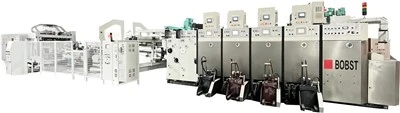

my country's printing machinery industry had a relatively late start; until the 1970s, the country relied primarily on letterpress printing technology. The true modern manufacturing of printing machinery only began during the early stages of the Reform and Opening-up era, emerging as a nascent domestic industry. However, since the advent of the Reform and Opening-up policy, the rapid expansion of the printing industry has driven demand for printing machinery, thereby facilitating the rapid growth of my country's printing machinery sector.
Statistical data indicates that there are 381 enterprises "above designated size" (large-scale enterprises) within my country's printing machinery industry. In the reporting year, these enterprises generated a total sales revenue of 20.35 billion RMB-an increase of 18.40% year-on-year-and realized a total profit of 1.265 billion RMB, representing a growth rate exceeding 100%. Furthermore, profits derived specifically from product sales amounted to 2.887 billion RMB, a year-on-year increase of 22.06%. In 2011, amidst a favorable domestic macroeconomic climate, the printing machinery industry continued to sustain robust growth. During that year, the industry's sales revenue rose by 16.82% compared to the same period of the previous year; total profits increased by 37.16%; and profits from product sales grew by 25.26%.
In the global printing machinery market, multinational corporations command a significant share and possess formidable competitive strength. These multinational firms have also established a near-monopoly on my country's domestic market for high-end printing machinery and equipment; consequently, Chinese printing enterprises are compelled to expend substantial amounts of foreign currency annually to import high-end printing production lines from abroad. Encouraged by national industrial policies, domestic printing equipment manufacturers have sought to advance by absorbing advanced foreign technologies and engaging in independent innovation. As a result, a select group of domestic firms have elevated their manufacturing capabilities to a level approaching international advanced standards, producing equipment capable of meeting the specific needs of domestic printing enterprises. Currently, domestically produced high-end printing equipment accounts for approximately 25% of the market share within the medium-to-high-end segment; however, multinational corporations remain the dominant competitive forces within this market tier.