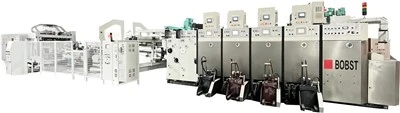

The inspection of printing machinery adheres to a rigorous process. The first step involves pre-inspection preparations, including shutting down the equipment to allow it to cool, cleaning the specific areas to be inspected, consulting technical documentation, and confirming the inspection plan. Concurrently, ambient temperature and humidity levels must be recorded, as environmental conditions can potentially influence certain inspection results.
The second step is instrument calibration and installation. Depending on the specific inspection items, the appropriate measuring instruments are calibrated-typically by zeroing them against a standard reference or datum surface-and then securely mounted at the designated measurement points on the equipment.
The third step entails executing the specific tests. Operations are conducted in a sequential manner: proceeding from static to dynamic states, from mechanical to electrical components, and from individual checks to integrated functional tests. For instance, static roller runout is measured first, followed by assessments of vibration and registration stability at both low and rated operating speeds. Throughout this process, raw data must be recorded in real-time and with strict objectivity.
The fourth step involves data analysis and preliminary verification. The measured data is compared against the equipment's technical specifications or established standard values to identify any anomalies. For critical parameters or anomalous data points, re-testing may be required to ensure confirmation. Finally, all inspection records are compiled to formulate preliminary findings, thereby providing the foundation for the subsequent preparation of the formal inspection report.
The inspection of printing machinery is primarily guided by a comprehensive set of domestic and international technical standards and industry norms. In the realm of international standards, the ISO 12647 series (Process Control for the Production of Halftone Color Separations, Proofs, and Production Prints) and the ISO 2846 series (Color and Transparency of Printing Inks) serve as benchmarks for color and quality assessment. Regarding mechanical safety, reference is made to ISO 12648, Safety Requirements for Printing Machinery.