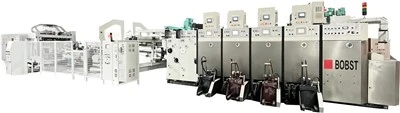

As the core production tool for modern industries such as publishing, packaging, labeling, and commercial printing, the performance status of printing machinery directly determines the quality, production efficiency, and manufacturing costs of the final product. Printing equipment inspection is a specialized activity that employs systematic technical methods to comprehensively evaluate a machine's mechanical precision, electrical performance, operational stability, and regulatory compliance. Conducting such inspections plays an indispensable and critical role in safeguarding production safety, achieving precise quality control, ensuring equipment adherence to mandatory national and industry regulations, and minimizing energy consumption and environmental pollution. Its core application scenarios encompass factory acceptance testing for new equipment, periodic maintenance and servicing, fault diagnosis and post-repair verification, as well as performance baseline assessments prior to process upgrades or equipment modifications. The ultimate objective is to ensure that printing equipment consistently operates in an optimal state, thereby meeting production requirements for high quality, high efficiency, and high stability.
Printing machinery inspection covers a wide range of specific parameters and components, broadly categorized into the following areas: Mechanical Performance Inspection-including radial and axial runout of cylinders, parallelism, pressure uniformity, as well as backlash, vibration, and noise levels within the transmission system; Electrical and Control System Inspection-covering motor drive performance, sensor accuracy, servo system response, and the stability and precision of various control units (such as ink volume, registration, and tension control); Print Quality-Related Inspection-such as registration accuracy, dot reproduction fidelity, ink density uniformity, and drying performance; and Safety and Environmental Compliance Inspection-including the effectiveness of safety guards, electrical grounding and insulation resistance, exhaust emission concentrations, and noise pressure levels.
The scope of inspection typically spans the entire lifecycle of the equipment-ranging from the acceptance testing of newly installed machinery and periodic in-service inspections, to specialized assessments conducted following major overhauls or the replacement of critical components. Applicable equipment types include, but are not limited to, offset presses, gravure presses, flexographic presses, screen printing machines, and digital printing systems; inspections focus specifically on their core operational components and the critical systems that directly impact final output quality and operational safety.