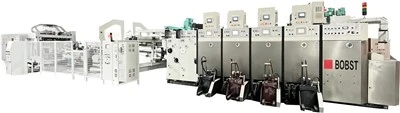

The operation of carton printing machinery typically begins with the preparation of the raw cardboard stock. After being cut to the required specifications, the corrugated cardboard enters the machine via a feeding system, where it undergoes initial positioning and alignment to ensure stability and precision during conveyance. To guarantee optimal subsequent printing results, the cardboard surface must remain clean and flat; where necessary, a simple pre-treatment process is applied to minimize the impact of dust or impurities on print quality.
Upon entering the printing stage, ink is uniformly delivered from the ink supply system to the printing plates, and subsequently transferred onto the cardboard surface. Depending on product requirements, either single-color or multi-color printing may be performed; multi-color printing necessitates the sequential overprinting of each color unit-a process that demands a high degree of registration precision. Throughout this process, critical parameters such as ink viscosity, printing pressure, and operating speed must be carefully controlled, as these factors directly influence the clarity of the graphics and the vibrancy of the colors.
Once printing is complete, the cardboard typically proceeds through post-processing stages-such as slotting, die-cutting, and creasing-to form the basic structural framework of the carton. It then moves on to the folding and joining stages (either via gluing or stapling), ultimately taking shape as a finished, usable carton product. Throughout this entire workflow, the various stages are tightly integrated, placing rigorous demands on both equipment stability and operational protocols to ensure the consistent quality of the finished product.